

 See My Latest Article on HelloNation
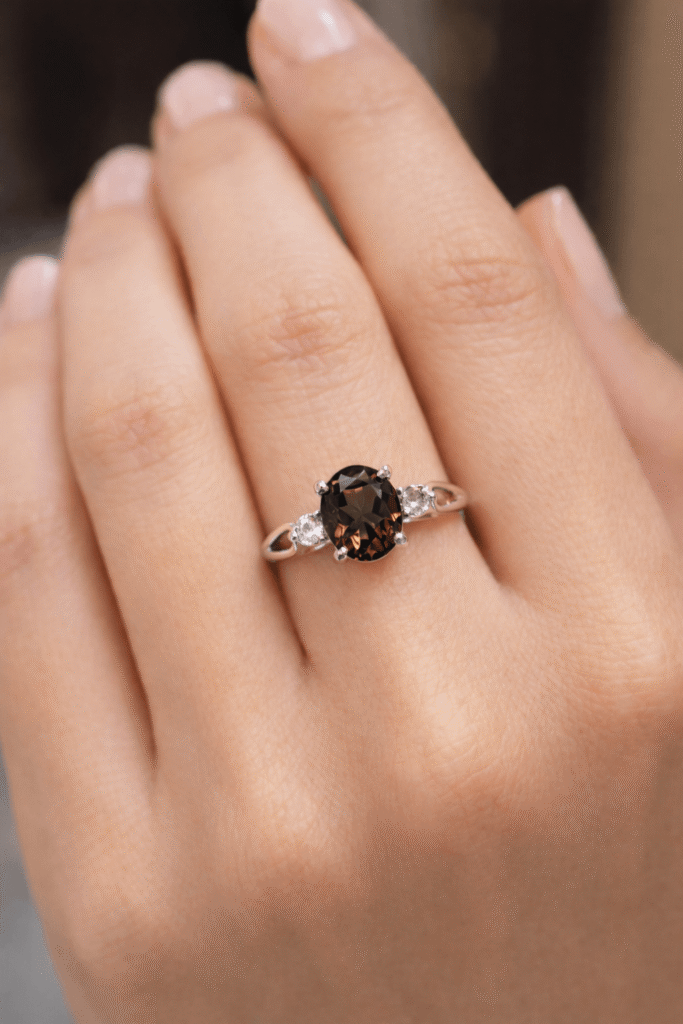
Finding a ring size at home is possible, but the result is an estimate rather than a guarantee. The most reliable approach is to measure more than once, use a ring that already fits well, and account for changes in finger size caused by temperature, time of day, and hand movement.
What ring size actually measures
A ring size reflects the inside circumference of a ring, not the width of the finger alone. In the United States, sizes usually increase in half-size and quarter-size increments. A ring that is slightly too small may feel tight over the knuckle, while one that is too large can rotate or slide off.
The correct fit should allow the ring to pass over the knuckle with gentle resistance. Once in place, it should feel secure without causing throbbing, pinching, numbness, or a deep indentation.
Finger shape also matters. Some people have narrow fingers with larger knuckles, while others have more uniform proportions. This is why two people with a similar-looking finger may need different ring sizes.
How can a strip of paper measure ring size?
A narrow strip of paper can provide a useful starting estimate. Choose a strip about ¼ inch wide and long enough to wrap comfortably around the intended finger.
- Wrap the paper around the base of the finger, keeping it snug but not tight.
- Mark the point where one end meets the paper.
- Lay the strip flat and measure from the end to the mark in millimeters.
- Repeat the measurement two or three times.
- Compare the circumference with a reliable ring-size chart.
The paper should not be wrapped diagonally or pulled tightly enough to compress the skin. A loose measurement can produce a ring that slips, while a compressed measurement can result in a size that feels uncomfortably tight.
For a finger with a prominent knuckle, measure both the base of the finger and the widest part of the knuckle. The ring must be large enough to pass over the knuckle but should not be so loose that it easily spins or falls off.
Can string be used instead of paper?
String or thread can be used, but it is generally less dependable. Flexible material may stretch during measurement or dig into the skin without making the error obvious.
If string is the only available option, use a nonstretch material and mark it carefully. Lay it against a ruler immediately afterward. Paper is often easier to control because it remains flat and does not stretch as readily.
A strip of thin plastic or a narrow piece cut from a clean, flexible sheet may also work, provided it does not stretch and can lie flat against the finger.
How can an existing ring help?
An existing ring that fits the correct finger is often more useful than measuring the finger directly. The ring should fit comfortably at the base, pass over the knuckle without force, and stay in place during ordinary hand movement.
Measure the ring’s inside diameter, meaning the distance across the interior from one inside edge to the opposite inside edge. Use a millimeter ruler and measure through the center of the ring, not across the metal.
For greater accuracy:
- Place the ring on a flat surface.
- Measure the inside opening at its widest point.
- Take several measurements to avoid reading the ruler at an angle.
- Compare the result with a ring-size conversion chart.
Do not measure the outside diameter because the band’s thickness will make the result appear larger than the actual finger opening.
When is the best time to measure?
Finger size changes throughout the day. Hands may be smaller in the morning and larger later in the day, especially after physical activity, warm weather, or extended periods of standing.
For a more useful estimate, measure when the hands are at a normal temperature and the body is relaxed. Avoid measuring immediately after:
- Exercising
- Showering or bathing
- Spending time outdoors in very cold conditions
- Eating a salty meal
- Wearing tight gloves
- Handling hot materials
Seasonal changes can be noticeable in Auburn, IN, where cold winter conditions may temporarily reduce finger size and warm, humid periods may increase swelling. A ring that fits in a cold room may feel tighter after time outdoors in summer, so measurements taken under ordinary indoor conditions are usually more representative.
Should both hands be measured?
Yes. The same finger on the left and right hands may not be exactly the same size. The dominant hand is often slightly larger because of differences in muscle use, joint development, or everyday activity.
Measure the specific finger that will wear the ring. Do not assume that the ring size for one hand will transfer perfectly to the other.
If the ring is intended for a finger that already has a ring, compare measurements from that finger rather than relying on a general size estimate. A thumb, index finger, middle finger, ring finger, and little finger can each require a different size.
What common mistakes cause inaccurate measurements?
Several small errors can make a home measurement unreliable:
- Measuring with a strip that is too wide or too narrow
- Pulling paper or string tightly around the finger
- Measuring only the base when the knuckle is larger
- Measuring a cold or swollen finger
- Using the outside diameter of an existing ring
- Reading a ruler at an angle
- Measuring only once
- Assuming every ring style fits the same way
A wide band usually feels tighter than a narrow band in the same nominal size because it covers more of the finger. If a ring has a broad band or several connected bands, the ideal fit may differ from that of a thin, simple band.
Ring shape also affects comfort. Rounded interior edges may feel more forgiving, while a flat interior can feel snug even when the measurement appears correct.
What should a home measurement be used for?
A home measurement is useful for narrowing down the likely size, checking whether an existing ring is close to the right fit, or preparing a surprise gift. It should not be treated as exact, especially for valuable jewelry, unusual ring designs, or fingers with significant knuckle differences.
If measurements fall between two sizes, comfort and ring design should guide the decision. A slightly wider band may need more room, while a delicate narrow band may fit comfortably at the smaller measurement. The preferred fit should still allow the ring to pass over the knuckle without force and remain secure during normal movement.
For the most dependable result, measure on multiple days and look for a consistent range rather than relying on a single number. Keeping a written record of the finger, hand, date, and conditions can also prevent confusion when comparing measurements later.